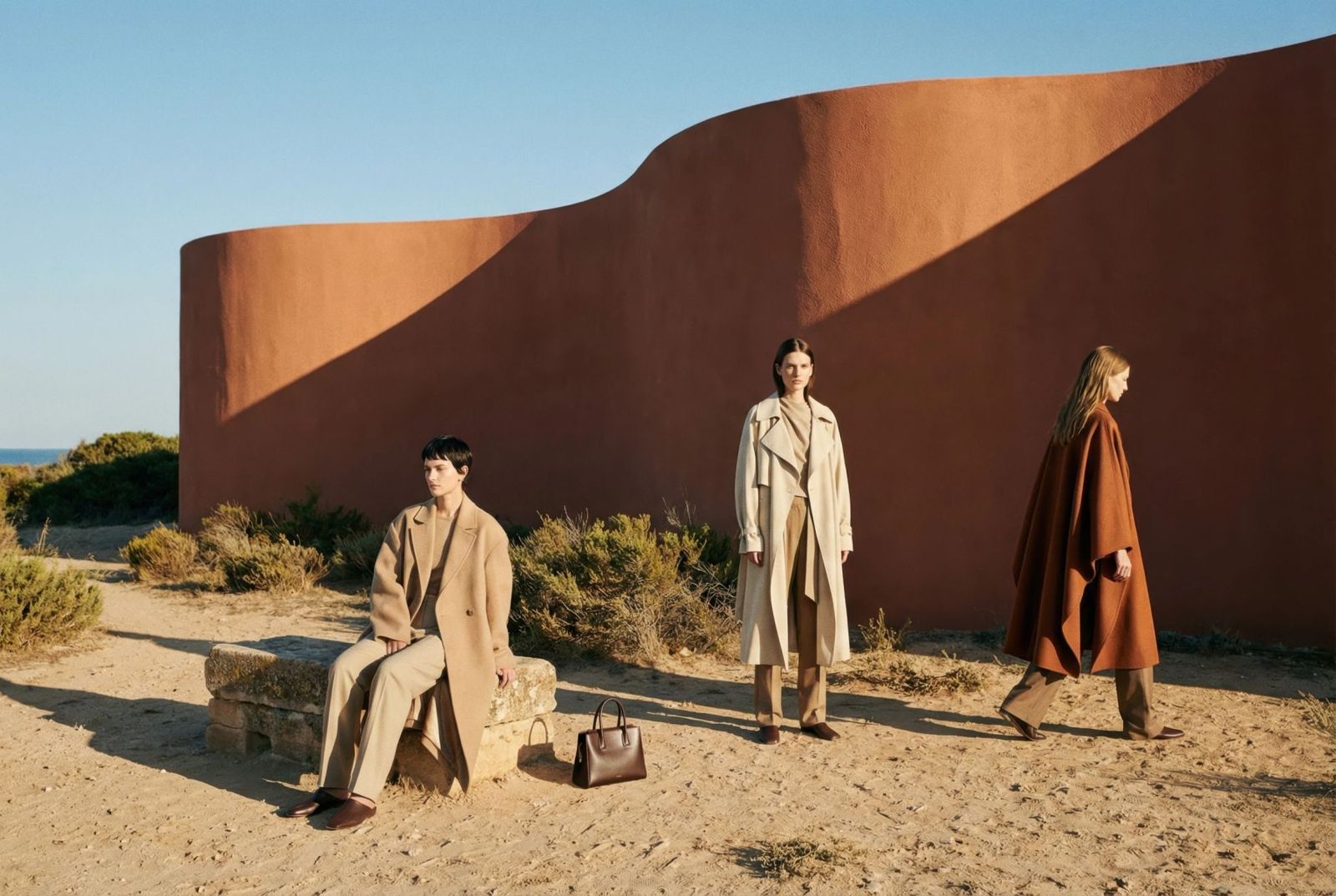
What a fashion or furniture photoshoot actually costs in time and budget — a complete breakdown for marketing leaders, plus how AI commercial production compares.
If you run marketing for a fashion, furniture, or lifestyle brand, you already know the line item. A single campaign shoot doesn't just cost the invoice you approve — it costs the six weeks of calendar, the three rounds of scheduling, and the season you almost missed because the studio rebooked.
Most marketing leaders have accepted that as the price of good visuals. It isn't anymore. This is a full breakdown of what a photoshoot actually costs — visible and hidden — and an honest account of where AI commercial production changes the math and where it doesn't.
The headline quote is the smallest number
When you approve a shoot, the number you sign off on is the day rate and the deliverables. That figure is real, but it's the tip of a much larger cost structure. The expensive parts of a photoshoot are the ones that don't appear as a single line: the time, the coordination, and the inflexibility baked into the process.
To make a fair comparison, you have to count all of it. Marketing leaders who only compare AI production against the shoot-day invoice are comparing against the wrong number — and usually undercounting what the traditional route costs them by half.
Where the money actually goes
A traditional product or campaign shoot has four cost centres, and only one of them is the part most people picture.
Pre-production. This is where the timeline quietly disappears. Location scouting, model casting, stylist booking, sample pulls and logistics, mood-boarding, and call sheets. For a considered campaign this is two to three weeks of work before anyone picks up a camera. It involves your team's time as much as the agency's, which means it's a cost you're paying in salaried hours that never lands on the invoice.
Shoot day. The visible cost. Studio rental, the photographer, assistants, models, hair and makeup, equipment hire, catering, sometimes travel. It's the line everyone budgets for, and ironically it's often the smallest slice of the true total. A day costs what a day costs — the problem is everything wrapped around it.
Post-production. Selecting from hundreds of frames, retouching, colour grading, then reformatting every approved image for every channel and aspect ratio you ship to — PDP, homepage hero, email, paid social, each platform's crop. Another one to two weeks, and a cost that scales with how many channels you actually run.
The hidden cost: rigidity. This is the one that hurts most and gets counted least. The moment the shoot wraps, your options are frozen. Need three more key visuals because a product got added to the drop? Want to test a different background for performance creative? Realised the hero shot doesn't work in a vertical crop? Each of those is a reshoot — new scheduling, new budget, new weeks — not a quick adjustment. You are paying not just for the images you got, but for the lack of any cheap way to change them.
A worked example
Numbers make this concrete. Consider a mid-sized furniture brand producing visuals for a seasonal collection of, say, 40 SKUs across catalogue, web, and social. A realistic traditional production might break down like this:
Pre-production: ~2 weeks of coordination, styling, and logistics.
Shoot: 2–3 days of studio, crew, and setup for 40 products with lifestyle context.
Post-production: ~2 weeks of retouching and multi-format delivery.
Total calendar: roughly 5–6 weeks from brief to usable assets.
Total cost: a five-figure budget once every line — visible and hidden — is counted.
- Pre-production: ~2 weeks of coordination, styling, and logistics.
- Shoot: 2–3 days of studio, crew, and setup for 40 products with lifestyle context.
- Post-production: ~2 weeks of retouching and multi-format delivery.
- Total calendar: roughly 5–6 weeks from brief to usable assets.
- Total cost: a five-figure budget once every line — visible and hidden — is counted.
Now add the realistic friction: one product arrives late, so it's not in the shoot. A buyer wants a colourway tested that wasn't styled. Marketing wants a vertical format that wasn't captured. In the traditional model, each of those is a separate, scheduled, billable problem. In practice, brands either absorb the cost or simply ship without the variant they wanted — which is a marketing cost too, just an invisible one.
What AI production changes
A managed AI production pipeline compresses that timeline and removes most of the rigidity. The brands we work with at PS Agency see campaign-ready visuals delivered roughly 2× faster and at 30–40% lower cost than a comparable traditional shoot.
Those figures are deliberately realistic. You'll see "70% cheaper, 10× faster" claims across the AI space — that's marketing, not reality, and any number that can't survive a finance review isn't worth quoting. The honest figures are still transformative when you're producing at the volume modern ecommerce demands, and they hold up under scrutiny, which matters more when you're the one defending the budget.
But the percentage discount isn't the real story. The real shift is flexibility. Once a pipeline is built around your products and your brand, generating an additional set of key visuals is a production task, not a new project. That changes the economics of the hidden cost entirely:
The late-arriving product gets added without a reshoot.
The new colourway gets generated, not re-styled and re-photographed.
The vertical crop, the alternate background, the seasonal refresh — all become iterations measured in days, not weeks.
- The late-arriving product gets added without a reshoot.
- The new colourway gets generated, not re-styled and re-photographed.
- The vertical crop, the alternate background, the seasonal refresh — all become iterations measured in days, not weeks.
For a lean creative team shipping multiple drops a season, this is the difference between a model that fights your volume and one that absorbs it. You stop choosing between blowing the budget and cutting the visual ambition.
What it is not
This is the part that separates a genuine production partner from a tool subscription, and it's worth being blunt about.
AI product photography done well is not handing your team a generator and a prompt guide and wishing them luck. That approach produces inconsistent, off-brand, uncanny output — and it quietly becomes your team's problem to fix, which means it isn't cheaper or faster at all once you count the rework.
A managed pipeline means the agency owns the craft end to end: concept, styling direction, consistency across an entire collection, retouching, and brand fidelity. What you receive is finished, campaign-ready assets — not raw generations you have to salvage. The human creative direction is the entire point. The AI is the mechanism that makes that direction fast and affordable to execute at scale. A team that came up through high-end fashion and commercial photography is what keeps the output at the standard premium brands actually require.
If a provider's pitch is "here's the tool, here's a tutorial," they've handed you a cost, not removed one.
The honest comparison
AI production will not replace every shoot, and any agency that claims otherwise is selling. There are campaigns where it isn't the right call:
A flagship hero image that defines a season and warrants a physical set.
A specific real-world location that's intrinsic to the story.
Editorial work where the texture of a genuine photographic moment is the product.
- A flagship hero image that defines a season and warrants a physical set.
- A specific real-world location that's intrinsic to the story.
- Editorial work where the texture of a genuine photographic moment is the product.
A good partner tells you when the traditional route is the right one. The value isn't in replacing photography wholesale — it's in being precise about which work belongs in which process.
Because the truth is that most of what a brand produces isn't the flagship hero. It's the volume work: the catalogue, the PDP imagery, the seasonal refreshes, the endless performance-creative variants. That work is high-volume, repetitive, and format-hungry — and it's exactly where the traditional photoshoot model quietly drains budget and calendar you don't need to spend. That's where AI commercial production earns its place, and it's where the cost and speed gains actually compound.
How to think about the decision
If you're a marketing leader weighing this, three questions cut to the answer:
Is visual production a recurring bottleneck? If you're regularly delayed, over budget, or cutting visual scope to fit the calendar, the photoshoot may no longer be the right default for your volume work.
How often do you need to iterate after the fact? The more variants, formats, and post-shoot changes you typically need, the more the traditional model's rigidity is costing you — and the more a flexible pipeline is worth.
Are you buying finished assets or buying a tool? Make sure any AI provider is delivering campaign-ready work, not offloading the production burden back onto your team under a different name.
- Is visual production a recurring bottleneck? If you're regularly delayed, over budget, or cutting visual scope to fit the calendar, the photoshoot may no longer be the right default for your volume work.
- How often do you need to iterate after the fact? The more variants, formats, and post-shoot changes you typically need, the more the traditional model's rigidity is costing you — and the more a flexible pipeline is worth.
- Are you buying finished assets or buying a tool? Make sure any AI provider is delivering campaign-ready work, not offloading the production burden back onto your team under a different name.
The takeaway
The product photoshoot has been the unquestioned default for so long that its full cost — the weeks, the coordination, the inflexibility — has stopped being visible. For flagship moments, it's still worth every part of that cost. For the volume work that fills your channels, it increasingly isn't.
A managed AI production pipeline gives you the same campaign quality, delivered roughly twice as fast and at 30–40% lower cost, with the flexibility to scale visual output without scaling headcount. The shoot stays in your toolkit. It just stops being the only tool.
PS Agency is a Dubai-based AI commercial production studio working with fashion, furniture, and lifestyle brands across the UAE and Middle East. Book a discovery call.
Share this post: