There's a question I get asked more than any other now: do you still shoot, or is it all AI?
It's the wrong question. It assumes the two are rivals — that you pick a side, that using one means abandoning the other. That framing has taken over the industry conversation, and it's produced a lot of noise and very little good work. Because the real skill was never choosing between a camera and a model. It's knowing what each one is for, and having the judgment to move between them without the seams ever showing.
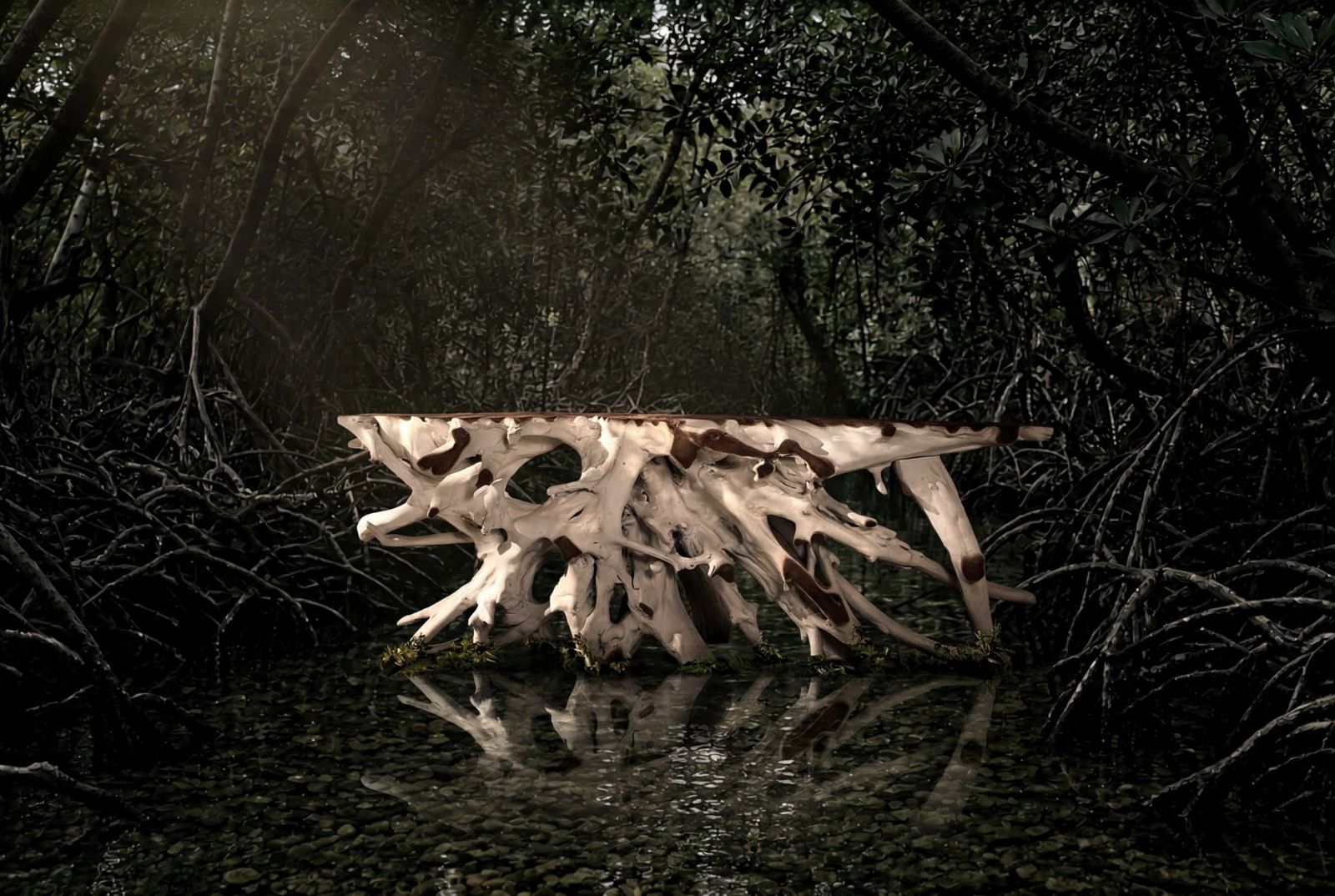
The Marina Home campaign is the clearest example I can give of what that actually looks like in practice.
Twenty hours on set
We shot for twenty hours across two locations. Real furniture, real light, real space. Logistics moving pieces between sites on a schedule that never quite relented. Stylists refining every composition down to the centimetre. A production team capturing details most people will never consciously register but every viewer will feel.
None of that is replaceable, and I want to be unambiguous about it: there is information in a real space that you cannot invent from nothing. The way late-afternoon light falls across a linen sofa and catches the weave. The specific weight of a room that is genuinely lived in rather than staged to look that way. The imperfection that reads as authenticity precisely because no one designed it. You have to be there. You have to make the calls in the moment, with the light changing and the clock running.
Somewhere around hour fourteen, we were still moving a single console a few centimetres to the left. To anyone watching, it would have looked absurd — all that time, all that crew, over a hand's width of positioning. But the frame wasn't true yet. That instinct, the refusal to accept "close enough," is the part of the craft that has nothing to do with technology and everything to do with taste. It's also the part that no tool will ever replace, because it isn't a skill you can prompt. It's a standard you either hold or you don't.
So we captured it properly. Not as a formality, and not as raw material to be fixed later. As the foundation everything else would be built on.
Then the shoot kept going
Here's where most people expect the story to end — deliver the frames, wrap the job, invoice the day. But a twenty-hour shoot doesn't have to produce only what the camera happened to see in those twenty hours. And this is the shift that most of the "AI versus photography" debate completely misses.
Once you have real, considered capture as your source, AI stops being a replacement for the shoot and becomes an extension of it.
We took the truth of what we shot — the palette, the quality of light, the mood, the material honesty of the pieces themselves — and used it as the anchor for everything that came after. Alternate compositions. Additional setups the schedule could never have physically fit into a single day. Variations, angles, and environments that stayed faithful to the campaign's soul, because they weren't conjured from a blank prompt. They were grown from something real.
A large part of the final Marina Home campaign was AI-produced in post. And here is the point I'm most proud of: you can't tell which is which. Not because we were hiding anything, but because that seamlessness was the work. The AI didn't dilute the shoot. The shoot disciplined the AI.
Why the order matters more than the tools
This is the distinction that separates hybrid production done well from AI used as a shortcut — and it's almost entirely about sequence.
Prompt-only AI drifts. With nothing real underneath it, it invents its own internal logic: lighting that doesn't obey physics, spaces that feel plausible in isolation but not true, a look that's striking in a single frame and quietly inconsistent across a set of forty. It has no source of truth to be faithful to, so every image becomes its own small negotiation with chance. You can get lucky. You cannot get consistent. And consistency is the entire job when you're producing a campaign rather than a one-off.
Capture-then-amplify inverts that completely. The shoot sets the standard first — the exact light, the real materials, the specific mood the brand looked at and approved — and everything generated afterward is measured against it. The AI is never deciding what the campaign looks like. The creative direction, established on set with real craft, is deciding. The AI is simply how that direction gets scaled past the physical limit of what one day could ever produce.
That's not a technical trick or a clever workflow. It's a creative philosophy, and it can be stated in one line: real craft first, amplification second, and judgment governing both ends of it. Get that order right and the technology disappears into the work. Get it wrong — reach for AI first and hope taste catches up later — and no amount of processing power will save the result.
What this actually gives a brand
Strip away the philosophy and here's the practical case.
More range from the same investment. A shoot that yields not twenty images but a full campaign's worth of assets, consistent from the first frame to the last. The permanence and honesty of genuine capture, delivered at the volume and flexibility modern brands actually need across channels, formats, and markets. And — the part that quietly matters most — a single point of creative direction making sure it all holds together. Because the fastest way to ruin a hybrid campaign is to let the two halves feel like they came from two different worlds: the shoot warm and considered, the generated work slightly off, slightly plastic, slightly not it. The join is where hybrid work lives or dies, and minding that join is a craft in its own right.
The part of a campaign people see is measured in seconds. The part they don't see is measured in the hundreds of small decisions underneath it — which frame was real, which was extended, where the line between them falls, and whether anyone can tell.
If they can't, we did our job.
Crafted by creatives. Powered by AI.
Share this post: